
Equity benchmark index Sensex buckled under selling pressure for the second straight session to close below the 65k mark on Friday, as investors offloaded IT, teck and metal stocks amid a bearish global trend. Besides, fresh foreign fund outflows also hit investor sentiments, traders said. In a volatile trade, the 30-share BSE Sensex declined 202.36 points or 0.31 per cent to settle at 64,948.66.
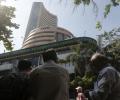
Benchmark equity indices Sensex and Nifty ticked higher for the ninth straight session on Thursday, buoyed by fag-end buying in banking, financial and realty stocks amid encouraging domestic retail inflation data. Weak trends in IT counters and fall in the overnight US equity markets triggered by fresh concerns over recession, however, put a check on market's uptrend. In a largely subdued session, the 30-share BSE Sensex went up marginally by 38.23 points or 0.06 per cent to settle at 60,431.

The Reserve Bank of India's (RBI's) decision on Wednesday to relax restrictions on banks operating in the International Financial Services Centre (IFSC) related to the repatriation of idle funds in foreign currency accounts (FCA) could give a fillip to trading in foreign stocks at the GIFT City.

Milk supplies could improve with the monsoon, provided the rains are not excessive.

The RBI has changed the way it approached supervision in the past. Having seen a couple of collapses in the NBFC sector and the near-collapse of a few banks, it is focusing on regular drills to prevent a fire from breaking out, explains Tamal Bandyopadhyay.

The government on Friday scrapped a minimum price threshold that it had set previously for exports of onion as it looked to pass on the benefit of international glut to Indian farmers. The government had previously fixed a $550 per tonne as the minimum export price (MEP), which essentially meant farmers could not sell their produce overseas at lower than this rate.

Largecap, flexicap, and balanced advantage funds together recorded a net inflow of Rs 9,363 crore in August, representing a 70% increase from the previous month's total.

Equity benchmark indices Sensex and Nifty on Friday reversed their six-session losing streak and rebounded more than 1 per cent on value buying in auto, IT, financial and energy stocks. Better than expected quarterly financial results of corporates also boosted investor sentiments even as uncertainties persisted over the escalating tensions in the Middle East, according to analysts. In a largely range-bound trade, the 30-share BSE Sensex rose 634.65 points or 1.01 per cent to settle at 63,782.80 points.

After lagging behind benchmarks and broader indices over the past five years, real estate investment trusts (Reits) have outperformed them since the start of 2024. The four listed Reits have posted an average return of 16 per cent year-to-date, compared to 9.9 per cent for the S&P BSE Sensex and 11 per cent for the National Stock Exchange Nifty.

'Someone posts a job on LinkedIn and there are a thousand resumes in an hour? This is not the America IT professionals are used to.' 'Once they lose their job, it's impossible to get a job.'

Among the 30 Sensex firms, Asian Paints, Infosys, JSW Steel, UltraTech Cement, Power Grid, Larsen & Toubro, HCL Technologies and Tata Steel were the biggest laggards. Tata Motors, HDFC Bank, Bharti Airtel, ITC, IndusInd Bank and Axis Bank were the gainers.

The "asset-right" strategy, reiterated by ITC chairman Sanjiv Puri during the company's 112th annual general meeting (AGM) on August 11, received a thumbs up from the analysts. They, however, believe that sustained earnings growth and synergies with the demerged hotel's vertical will help the stock break out from the ongoing consolidation. "The stock is expected to consolidate between Rs 420 and Rs 450 in the near future.

Logistic players have seen a sharp correction at the bourses over the past six months as intense competition from new-age-tech startups, higher freight rates, and weak macros dented listed players' growth outlook. Analysts warn that the emergence of tech-based startups could weigh on organised players' profit-pool, and can potentially erode their market share. Thus, a stock-specific strategy would be prudent at this juncture with focus on companies that are rapidly innovating and investing in technology.

If you already hold significant amounts of equity in your portfolio, avoid MAAFs with over 60 per cent equity. But if you lack equity exposure, an aggressive MAAF may be appropriate.

Metropolis Healthcare (MHL) has decided to acquire a 100 per cent stake in Gurgaon-based Core Diagnostics for Rs 247 crore. This is about 2.2x FY24 (financial year 2023-24) enterprise value (EV)/sales and estimated 14x FY26 EV/Ebitda for the deal.

From the Sensex basket, Tech Mahindra, Tata Steel, JSW Steel, HCL Technologies, Tata Consultancy Services, Larsen & Toubro and Kotak Mahindra Bank were the biggest laggards. Mahindra & Mahindra, Power Grid, Bajaj Finance, IndusInd Bank and Maruti were the major gainers.

Tata Power saw a big sell-off, with the stock falling almost 8 per cent after declaring disappointing results for the October-December quarter (Q3) of 2023-24 (FY24) on Friday evening. The company reported net consolidated revenue of Rs 14,650 crore, up 4.4 per cent year-on-year (Y-o-Y), and earnings before interest, tax, depreciation, and amortisation (Ebitda) of Rs 2,607 crore, up 2 per cent Y-o-Y, in the quarter, led by higher sales across Odisha distribution companies (discoms) and capacity addition in renewables. This was well below consensus estimates.

Will India drop Rohit for the Sydney Test and put Kohli on notice? Or will the team management grant the senior pros a final chance to redeem themselves?

While analysts assessed One97 Communications (Paytm) Q1FY24 results as in-line with guidance, the market was disappointed and the stock fell by around 5 per cent. Paytm reported a net loss of Rs 360 crore, but revenue grew 39 per cent year-on-year (YoY) to Rs 2,340 crore. It was supported by strong growth in gross merchandising value (GMV), higher disbursements and the addition of subscription devices.

After a gap of nearly two years, India's industrial production turned negative as it contracted by 0.1 per cent in August, mainly due to a decline in the mining and power generation sectors' output, in addition to an almost flat expansion in the manufacturing sector. According to the data released by the National Statistical Office (NSO), factory output growth based on the Index of Industrial Production (IIP) has also been revised downwards for July to 4.7 per cent from the earlier estimate of 4.8 per cent. "The IIP growth rate for the month of August 2024 is (-) 0.1 per cent, which was 4.7 per cent in the month of July 2024," NSO said in a release.

'Investors with foreign currency-denominated goals, such as foreign education or foreign travel, should go for US equity funds.'

Among the 30 Sensex firms, Bajaj Finance, Infosys, Adani Ports, JSW Steel, HCL Tech, Bharti Airtel, IndusInd Bank and Tata Motors were the biggest laggards. ICICI Bank, Bajaj Finserv, Titan, Nestle and HDFC Bank were among the gainers.

After a sharp correction over the last few months, analysts seem to be turning cautiously optimistic on the information technology (IT) sector and suggest there could be trading opportunities in select counters despite revenue and growth concerns that still plague the sector. "IT stocks valuations have corrected 17 per cent-49 per cent and stock prices have corrected 9 - 42 per cent since mid-December 2021. Nifty IT index valuation has corrected by 27 per cent and price by 21 per cent. "About two quarters ago, we made a case that valuation drivers have peaked.

Foreign investors have adopted a cautious stance and infused Rs 7,320 crore in the Indian equities in August owing to high valuation of stocks and the unwinding of the Yen carry trade after Bank of Japan raised interest rates. This investment was way lower than Rs 32,365 crore in July and Rs 26,565 crore in June, according to data with the depositories. While September is likely to see continued interest from FPIs, the flows would be shaped by a combination of domestic political stability, economic indicators, global interest rate movements, market valuations, sectoral preferences, and the attractiveness of the debt market, Vipul Bhowar, Director Listed Investments, Waterfield Advisors, said.

Textile stocks have exhibited a mixed performance so far this calendar year (CY23), amidst higher domestic cotton prices and tepid global demand. Shares of Page Industries, Dollar Industries, Lux Industries, and VIP Clothing have declined up to 13 per cent so far in CY23, as against a 9 per cent jump in the S&P BSE Sensex. On the contrary, shares of Arvind, Welspun India, Raymond, and Gokaldas Exports have gained up to 51 per cent, during the same period.

Around six weeks ago, Sun Pharmaceutical Industries, India's largest drugmaker, suffered a setback, which led to a selloff in the share. The US District Court of New Jersey granted Incyte's request for a preliminary injunction against Sun Pharma's launch of Leqselvi, a drug that treats alopecia.

'Arbitrage funds make the most sense for those in the 30 per cent tax bracket, are viable for those in the 20 per cent bracket, but less so for those in the 10 per cent bracket.'

Quarterly earnings of corporates, trading activity of foreign investors and inflation data are the key factors that are expected to drive the momentum in the equity markets this week, analysts said.

A muted revenue performance in the September quarter and weak management commentary weighed on the stock of consumer major Marico which shed 8.5 per cent to Rs 542 from its intraday highs on Tuesday. The company indicated that demand trends were similar to that of the June quarter with instances of increasing food prices and below-normal rainfall distribution in some regions impeding the anticipated recovery in rural demand.

India is unlikely to see a repeat of the 2021 energy crisis this festive season as coal-fired power stations across the country have comfortable levels of the fuel stock to meet electricity demand of the world's fastest expanding major economy.

As there is a moderation in car sales, dealer stock levels across the entire industry have surged to alarming heights. However, the situation is under control at HMIL.

Equity-focused schemes may perform better in a bull market, while debt-oriented ones may offer greater stability during volatile periods.

RBI interest rate decision, macroeconomic data and global trends would guide markets' movement this week, analysts said. Besides, trading activity of foreign investors and the last batch of Q1 earnings announcements would also guide trends in equities. HSBC PMI (Purchasing Managers' Index) for the services sector is scheduled to be announced on Monday.

Long-term tax-saving FDs can also be considered after the PPF limit has been exhausted.

The government's subsidised onion sale initiative, launched on September 5, has led to price drops in major cities within days, the consumer affairs ministry said on Saturday. In Delhi, retail onion price fell from Rs 60 to Rs 55 per kg, while Mumbai saw a decrease from Rs 61 to Rs 56 per kg. In Chennai, the retail price reduced from Rs 65 to Rs 58 per kg, the ministry said in a statement.

Foreign investors turned net sellers in October, withdrawing shares worth Rs 58,711 crore in the month so far owing to escalating conflict between Israel and Iran, a sharp rise in crude oil prices, and the strong performance of the Chinese market. The outflow came following a nine-month high investment of Rs 57,724 crore in September. Since June, Foreign Portfolio Investors (FPIs) have consistently bought equities, after withdrawing Rs 34,252 crore in April-May.

India's manufacturing sector growth moderated in August as output and sales rose at slowest rates since January, while competitive pressures and inflation concerns hampered business confidence, a monthly survey said on Monday. The seasonally adjusted HSBC India Manufacturing Purchasing Managers' Index (PMI) stood at 57.5 in August, below July's reading of 58.1 but above its long-run average of 54.0, signalling a substantial improvement in operating conditions.

Food delivery platform Zomato has laid the foundation for its third vertical of growth by agreeing to acquire Paytm's entertainment and ticketing business, said analysts on Thursday (August 22). Zomato, which also runs a quick commerce business called Blinkit, will strengthen its 'going out' offering but the acquisition may take time to yield results, they said. "Paytm's entertainment and ticketing arm will be part of Zomato's District app, which is due to be launched in the coming weeks.

For the first time in history, the luxury car market is poised to cross the sales mark of 50,000 units in 2024, with Mercedes leading the way

UltraTech Cement was the biggest gainer in the Sensex chart, climbing 3.13 per cent, followed by Kotak Mahindra Bank, Tata Motors, Axis Bank, Maruti, Bajaj Finserv, Bajaj Finance and Mahindra & Mahindra. In contrast, Infosys, Tech Mahindra, Tata Consultancy Services, Wipro, Bharti Airtel, HCL Technologies, ICICI Bank and Nestle were among the laggards.
